What a rolling tenancy is
A rolling tenancy — the legal term is a periodic tenancy — is one that runs from one rental period to the next without a fixed end date. If you pay monthly, the tenancy renews itself month by month; if you pay weekly, week by week. It carries on until you give notice to leave or the landlord obtains possession on one of the legal grounds.
There is nothing to renew and nothing to re-sign. The terms of the agreement you started with — who repairs what, whether you can keep a pet, how the deposit is held — continue to apply, period after period.
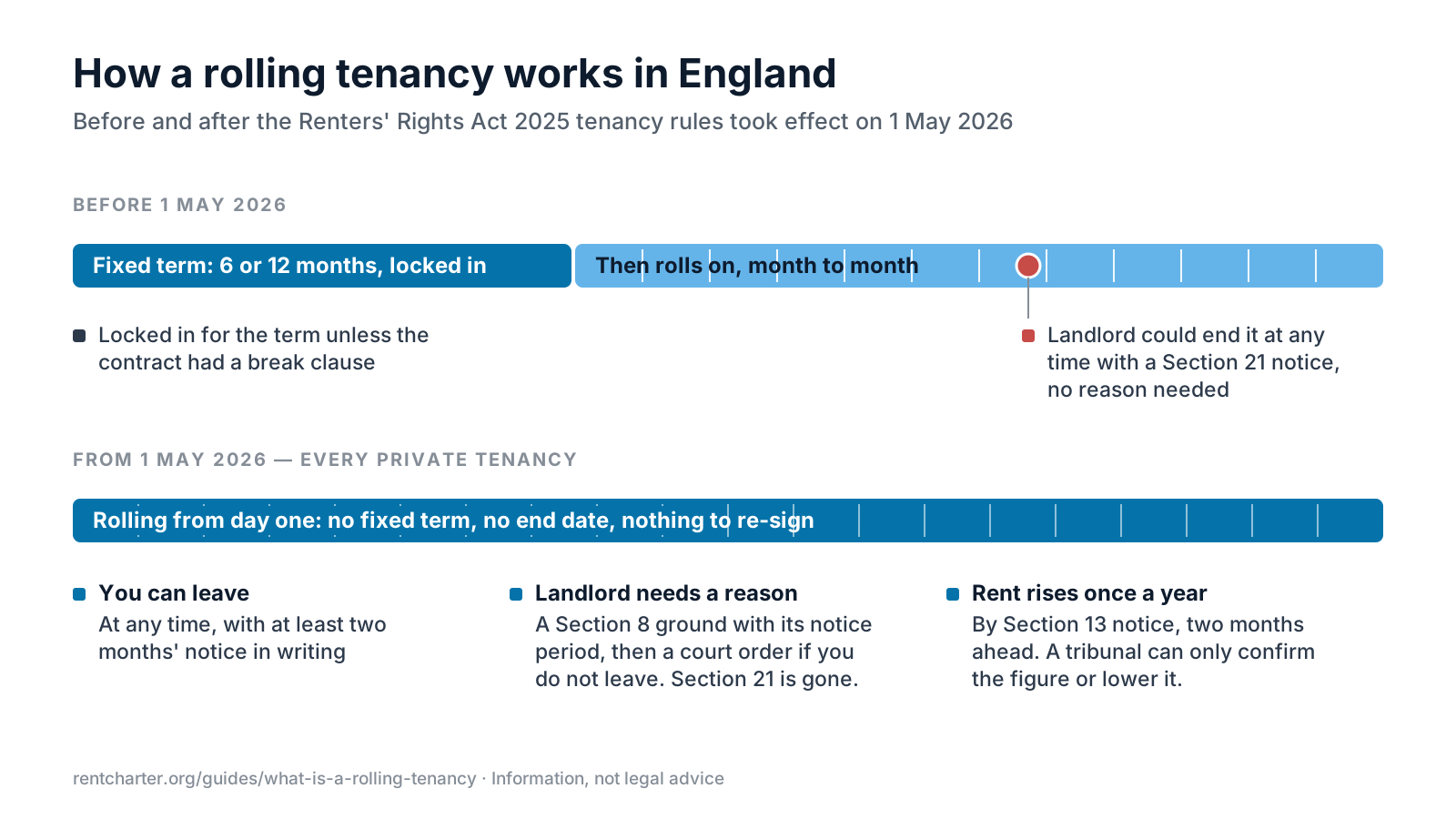
Since 1 May 2026, every tenancy in England rolls
Until 2026 most private renters in England started on a fixed term of six or twelve months and rolled onto a periodic tenancy only when it ran out. The Renters' Rights Act 2025 ended that. From 1 May 2026:
- Every private assured tenancy in England is periodic, with a rental period of no more than a month.
- Fixed terms can no longer be created. A contract that says “twelve months from [date]” still takes effect as a periodic tenancy.
- Tenancies that were part-way through a fixed term on that date converted automatically to periodic ones. The paperwork may still say “assured shorthold tenancy” and give an end date; the legal form underneath has changed.
The wider reform is covered in our explainer on the Renters' Rights Act 2025.
How a rolling tenancy works day to day
Very little changes from one month to the next. You pay rent for each period as it falls due. Your landlord's duties — repairs, gas and electrical safety, protecting your deposit — are the same as they always were. Any change to the written terms, other than a rent increase by the Section 13 route, needs your agreement. And the tenancy has no natural end: nobody has to do anything for it to continue.
Rolling tenancy notice period: leaving
You can end a rolling tenancy at any point by giving your landlord at least two months' notice in writing, unless they agree to accept less. You are liable for rent up to the end of the notice period, and you should get written confirmation of the date the tenancy ends so there is no argument later about when your deposit falls due for return.
Can the landlord end a rolling tenancy?
Not without a reason the law recognises. Section 21 “no fault” notices — the old way of ending a rolling tenancy without giving a reason — were abolished by the Act. A landlord now has to rely on one of the Section 8 grounds for possession, serve the notice period that goes with that ground, and, if you do not leave, obtain a court order.
The notice periods vary with the ground. Where the landlord wants to sell the property or move in themselves or a close family member, they must give four months' notice and cannot use those grounds at all in the first twelve months of the tenancy. Where the ground is serious rent arrears, the arrears must have reached three months and the notice is four weeks. Serious anti-social behaviour carries a much shorter notice. A notice that does not state a ground, or gives less notice than the ground requires, is not valid.
If you have received anything that looks like an eviction notice, the eviction notice checker walks through what it needs to contain, and Shelter's emergency helpline is the right first call if you are being told to leave.
Rent increases on a rolling tenancy
Because the tenancy never reaches a renewal point, there is no “new contract” at which the rent can quietly reset. The only way a landlord can raise the rent is by serving a Section 13 notice on the prescribed form, giving at least two months' notice, and doing so no more than once in any twelve months. Rent review clauses in the agreement have no effect.
If you think the proposed figure is above what similar properties let for locally, you can apply to the First-tier Tribunal for an open market rent determination before the new rent starts. Form MR1, a £47 fee that is often £0 with a waiver, and the tribunal can only confirm or lower the proposed rent — it cannot raise it. Our guide to rent increases on a periodic tenancy goes through the mechanics, and the free rent check shows where a proposed figure sits against comparable local lets.
What your old fixed-term contract means now
If you signed before May 2026, your agreement probably has a fixed term, an end date and perhaps a break clause. Here is how to read it now:
- The end date and the break clause do nothing. You can leave with two months' notice at any time; the landlord needs a Section 8 ground regardless of the date on the paper.
- Every other term still applies — the rent, the deposit arrangements, who maintains the garden, the rules on pets and smoking — subject to the Act's new protections, such as the right to ask for a pet and not be unreasonably refused.
- “Renewal” letters can be ignored. Agents used to charge for renewing a fixed term. Renewal fees have been banned since 2019, and there is nothing to renew. If an agent sends a new agreement with a fresh fixed term, you do not have to sign it, and if you do, the fixed term has no effect.
- A rent figure written into a renewal is not a rent increase. Only a Section 13 notice can raise the rent.
Joint tenants on a rolling tenancy
If two or more of you signed the same agreement you are joint tenants: each of you is responsible for the whole rent, and the tenancy is a single tenancy shared between you. Two consequences matter on a rolling tenancy:
- As a general rule, a valid notice to quit served by one joint tenant ends the tenancy for all of you. If one person wants to leave and the others want to stay, speak to the landlord about a replacement tenant or a new agreement before anyone serves notice, and get advice.
- A Section 13 rent increase applies to the tenancy as a whole. Any one joint tenant can apply to the tribunal to challenge it, and the outcome binds everyone.
This guide covers private tenancies in England. Scotland, Wales and Northern Ireland have their own tenancy law, and the Renters' Rights Act 2025 does not apply there.
Frequently asked questions
Is a rolling tenancy less secure than a fixed term?
Under the old rules it was, because a landlord could end a periodic tenancy with a Section 21 notice. The Renters' Rights Act 2025 abolished Section 21, so a rolling tenancy is now the secure default: the landlord needs a legal ground to seek possession, and you can leave whenever you like with two months' notice.
Do I need to sign a new contract when my fixed term ends?
No. Fixed terms no longer exist for private assured tenancies in England, and a tenancy that was fixed-term before 1 May 2026 converted to a periodic one on that date. Agents cannot charge renewal fees (banned by the Tenant Fees Act 2019), and a 'renewal' that tries to create a new fixed term has no effect.
What is the difference between a periodic and a rolling tenancy?
Nothing. 'Rolling' is the everyday word and 'periodic' is the legal one. Lawyers used to distinguish a statutory periodic tenancy (created when a fixed term ran out) from a contractual one (rolling from day one); for tenancies in England since 1 May 2026 that distinction has largely fallen away.
What is the notice period on a rolling tenancy?
For the tenant, at least two months in writing, unless the landlord agrees to less. For the landlord, it depends on the Section 8 ground: four months to sell or move in (and not in the first twelve months of the tenancy), four weeks for rent arrears of three months or more, and shorter only for serious anti-social behaviour. A notice that names no ground is not valid.
Is my lodger arrangement or student halls a rolling tenancy?
Usually not. A lodger who lives with the landlord has a licence rather than an assured tenancy, and purpose-built student accommodation sits outside the assured tenancy rules. This guide is about private tenancies in England where the landlord does not live in the property with you.