Every rent dispute in England — a negotiation with your landlord, or an application to the First-tier Tribunal — comes down to one question: what do similar properties nearby let for right now? The answer is a set of rent comparables: real, recent lettings of properties like yours. This guide covers where to find them, how to choose them, and how to present them so a landlord or a panel takes them seriously.
What counts as a rent comparable
A comparable is a property let on the open market that is similar enough to yours that its rent tells you something about what yours should be. The tribunal's yardstick is the open market rent: what a willing landlord could expect from a willing tenant for a similar property, let on similar terms, in the same area, today. “Similar” means, roughly in order of importance:
- Same number of bedrooms — the single biggest driver of rent.
- Same type — flat with flat, house with house, studio with studio, room with room.
- Same area — the same neighbourhood or postcode district, not just the same town.
- Similar size, condition and floor — a refurbished flat and a tired one are not the same product.
- Similar terms — furnished or unfurnished, bills included or not, parking, garden, and a normal private tenancy rather than a holiday or serviced let.
Why comparables win
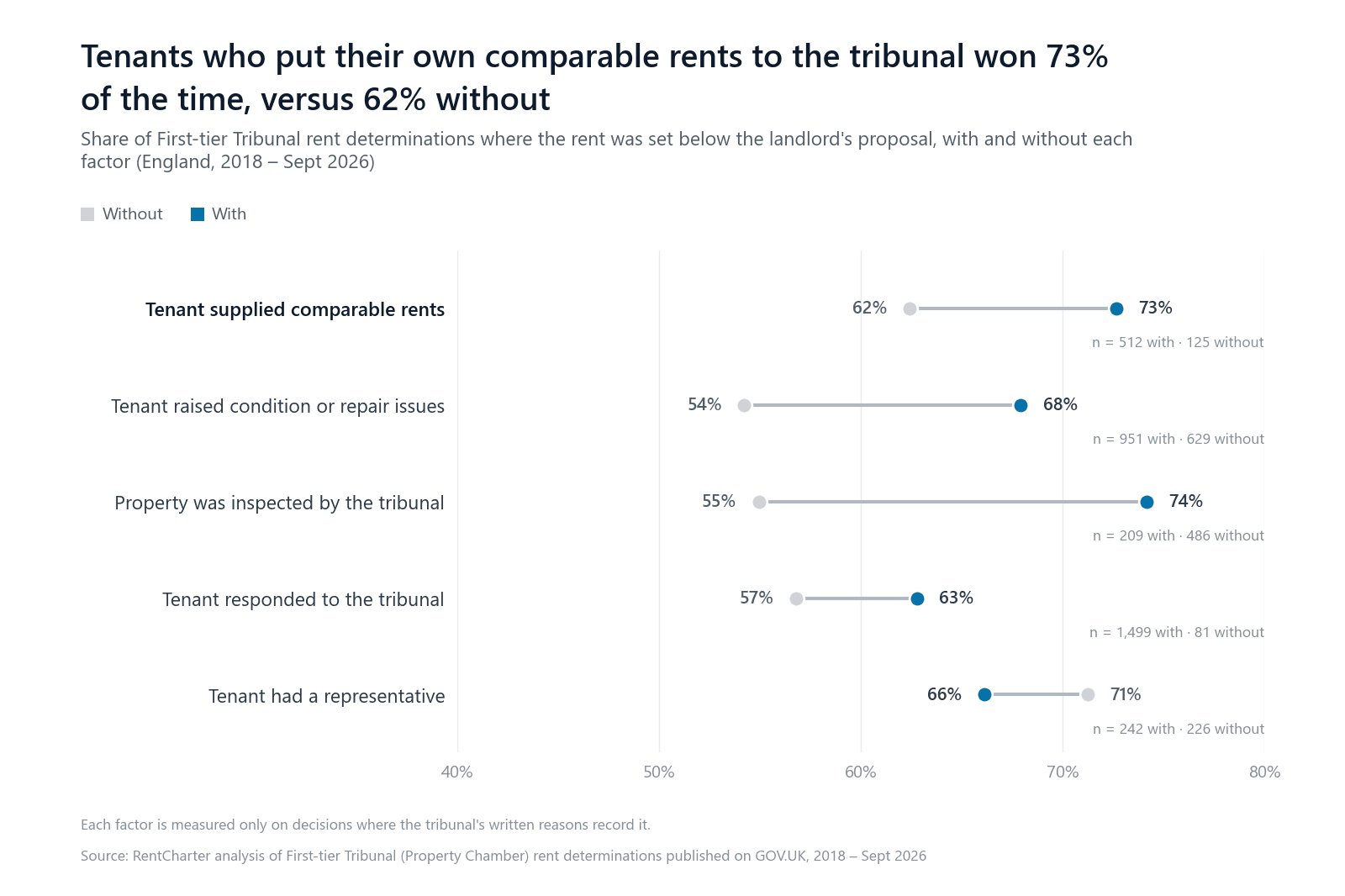
We analysed every published market-rent decision of the First-tier Tribunal since 2018. In the 637 decisions whose written reasons record whether the tenant supplied comparables, tenants who put their own comparable rents in front of the panel won 73% of the time; tenants who supplied none won 62%. The reason is simple: the panel is answering a valuation question, and it starts from whichever side's numbers are in the bundle. If the only lettings evidence is the landlord's, the valuation starts from the landlord's picture of the market.
The same is true in negotiation. A landlord who receives a letter with three dated comparables attached is being told, politely, that you have done the tribunal's homework for it.
Where to find rent comparables
- Listings portals. Rightmove, Zoopla, OnTheMarket and OpenRent let you filter by bedrooms, property type and a radius from your postcode. Two habits matter: switch on “let agreed” or “include let properties” so you see what actually went, not just what is sitting unlet; and screenshot each listing with the date visible, because adverts disappear.
- Room-letting sites such as SpareRoom, if you rent a room in a shared house or an HMO. Compare rooms with rooms, noting whether bills are included.
- Letting agents. Agents' own websites list recent lets, and most will tell you over the phone what similar properties have been letting for. A short written market appraisal from a local agent, if you can get one, is strong evidence.
- Published tribunal decisions. Our tribunal decisions database shows what panels have actually set as market rent for properties in your postcode area, with the bedroom count and outcome. A determined rent for a similar property nearby is a comparable the tribunal already agrees with.
- Your building and your neighbours. If the flat upstairs with the same layout was let last month, that rent is about the best comparable there is — especially if it is the same landlord. Ask; tenants are usually happy to say.
- Official statistics, for context. ONS private rental figures by local authority show the wider band. Use them to frame the picture, not as a comparable in themselves — they cover all tenancies, including long-standing ones, so they lag the new-let market a tribunal is valuing.
Choosing comparables a tribunal will accept
Panels have seen thousands of comparables and discount weak ones instantly. Apply these filters before anything goes in your bundle:
- Match bedrooms exactly. A two-bed is not evidence about a one-bed at any price.
- Stay close. Same postcode district or within about a mile in a comparable area. Cross a main road into a different neighbourhood and you owe the panel an explanation.
- Stay recent. Three to six months either side of the date the new rent would start.
- Prefer achieved to asking. A “let agreed” figure beats an advert. Where you only have asking rents, say so — the panel will expect a small discount.
- Note the differences and adjust. Furnished, bills included, parking, outside space, floor level, condition. A comparable that is better than your property and lets for the same or less is particularly useful: it shows the ceiling.
- Keep the source. Portal name, URL, date seen, screenshot. Unsourced figures are just assertions.
How many comparables you need
Three to six. Three close matches carry more weight than ten loose ones, and a long list of mismatched properties invites the panel to pick it apart. In one published decision a landlord submitted five comparables for a one-bedroom flat — all of them two-bedroom flats. The tenant submitted none but pointed out the mismatch, and the panel discounted the list and set the rent below the proposal. Fewer, closer, dated.
How to set rent comparables out
A table, one row per comparable, followed by a one-line summary. This is the shape panels are used to reading and the shape a landlord can check in a minute:
| Property | Details | Rent | When and source | Note |
|---|---|---|---|---|
| 2-bed flat, [street], [postcode district] | 1st floor, unfurnished, no parking | £[rent] pcm | Let agreed, [month year] Rightmove (screenshot dated [date]) | Closest match |
| 2-bed flat, [street], [postcode district] | 2nd floor, furnished, bills excluded | £[rent] pcm | Advertised, [month year] OpenRent (screenshot dated [date]) | Asking rent; furnished, so likely above yours |
| 2-bed flat, same building | Same layout, refurbished kitchen | £[rent] pcm | New let, [month year] Neighbour's tenancy agreement | Better condition than yours at a similar rent |
Then the summary line, which is the part people actually read:
Attach the screenshots behind the table in the same order, each with the date visible. If you rely on a determined rent from a tribunal decision, cite the case reference and date.
Mistakes that get comparables discounted
- Wrong bedroom count or property type. The most common error, and the quickest way to lose the panel's confidence.
- Stale lettings. A rent from over a year ago describes a different market.
- Cherry-picking outliers. Listing only the three cheapest flats in the district, with nothing typical, reads as advocacy rather than evidence. Include the honest spread.
- Arguing inflation instead of market. CPI, wage growth and what you paid last year are not the test. Our post on what counts as a fair rent increase explains why.
- Arguing affordability. The tribunal cannot take your income into account when setting a market rent.
- Comparing with social or regulated rents, or with holiday lets and serviced apartments. Different markets.
- No dates, no sources. Every row needs both.
Using them: letter, tribunal, evidence pack
In a letter to your landlord, the table goes in as an attachment and the summary line goes in the body. Our rent increase letter templates are written to carry exactly this evidence.
In a tribunal application, the comparables are the core of your written case. The tribunal will issue directions asking each side for its evidence; send the table, the screenshots and a short statement about the property's condition. See how to challenge a Section 13 rent increase for the steps and deadlines.
In the RentCharter evidence pack, the market quartiles for your postcode, the nearby tribunal precedents and a comparables worksheet are laid out in the format panels are used to reading. Upload your tenancy agreement on the first step of the rent check and the full result and pack are free; otherwise you can see the basic comparison and unlock the rest for £9.99.
Frequently asked questions
Do asking rents count as rent comparables?
Yes. Advertised rents are the most available evidence and tribunal panels use them, but they usually apply a discount because properties often let for less than the advertised figure. Note the asking price and the date you saw it, and wherever you can, capture the 'let agreed' figure or the listing's rental history too.
How recent do rent comparables need to be?
Ideally from the three to six months before the date the new rent would start. The tribunal values the property at the market on that date, so a rent from eighteen months ago says little, even for an identical flat.
Can I use the ONS average rent for my area as a comparable?
As context, not as a comparable. ONS and VOA figures cover all existing tenancies, including long-standing ones on older rents, so they lag and understate what a property lets for to a new tenant today. A tribunal is valuing a new letting. Use the ONS band to show the wider picture, then rely on current lets for the argument.
What if I cannot find anything similar nearby?
Widen the area before you change the property type. A similar flat a mile away in a comparable neighbourhood is better evidence than a bigger house on your own street. When you widen, say so and explain the adjustment you think it justifies.
Do I need a professional valuation?
No. Tribunal panels include valuers who bring their own knowledge of the local market. Your job is to put well-chosen evidence of current lets in front of them. A written market appraisal from a local letting agent helps if you can get one, but it is not required.