If you rent privately in England, your landlord had to register your deposit with a government-approved scheme within thirty days of receiving it, and tell you where it is. Many tenants never check. Each of the three schemes runs a free online lookup, and it takes about five minutes to run all three. This guide walks through what to type in, what you should see, and what to do if the answer is nothing.
Why check whether your deposit is protected
- Getting it back. At the end of the tenancy the scheme, not the landlord, is your route to the money if there is a disagreement. If the deposit is not registered, that route does not exist and you are chasing the landlord directly.
- Compensation. If the deposit was not protected within thirty days, a court can order the landlord to pay you between one and three times its value, on top of returning it. See my landlord didn't protect my deposit.
- Leverage. A landlord who has not complied with the deposit rules is in a weak position in any later dispute, including some possession claims. Knowing where you stand before a disagreement starts is worth five minutes.
What you need to hand
The lookups ask for some combination of:
- the postcode of the property;
- your surname (or the lead tenant's, for a joint deposit);
- the date your tenancy started;
- the amount of the deposit you paid;
- the deposit ID or repayment ID from the certificate, if you were ever sent one.
Have your tenancy agreement and the bank transfer for the deposit open. If the amounts do not match, note it — that matters later.
How to check: the three scheme lookups
Only three schemes are approved to hold deposits for tenancies in England (the same three operate in Wales). Your landlord had to use one of them. If you were not told which, check all three — there is no central register.
- Deposit Protection Service (DPS) — depositprotection.com, “Is my deposit protected?” search. Asks for: Property postcode, your surname, tenancy start date and deposit amount, or the DPS deposit ID from your certificate.
- Tenancy Deposit Scheme (TDS) — tenancydepositscheme.com, Deposit checker. Asks for: Property postcode, your surname, the deposit amount and the tenancy start date. TDS is widely used by letting agents.
- mydeposits — mydeposits.co.uk, Deposit checker. Asks for: Property postcode and surname, or the deposit protection number from your certificate.
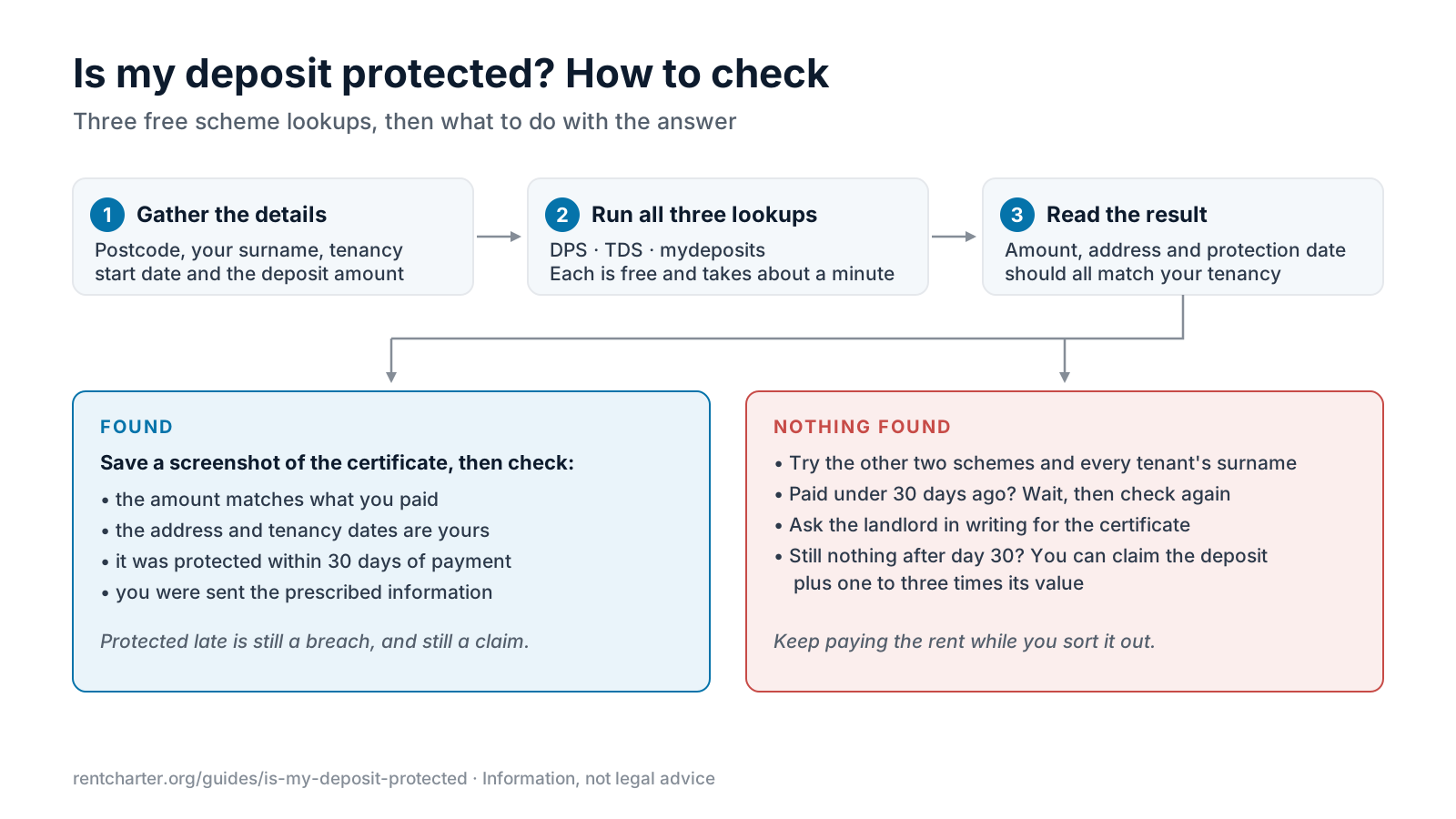
Each scheme runs a custodial version (the scheme holds the money) and an insured version (the landlord keeps the money and pays the scheme to insure it). Both appear in the same lookup.
What a valid result looks like
A protected deposit shows a record with:
- the scheme's name and a deposit or certificate ID;
- the property address, matching yours;
- the amount protected, matching what you paid;
- the date it was protected — which should be within thirty days of the date you paid it;
- the landlord's or agent's name.
Screenshot the result and save it with your tenancy documents. If the protection date is more than thirty days after you paid, the deposit is protected now but was protected late, which is still a breach of the rules and still gives you a claim.
The paperwork you should also have
Registering the deposit is only half of the landlord's duty. Within the same thirty days they must give you the prescribed information: a set of details laid down in regulations. It usually arrives as a certificate plus a scheme leaflet, and it should tell you:
- which scheme holds the deposit and how to contact it;
- the amount of the deposit and the address of the property;
- the landlord's (or agent's) name and contact details;
- how to apply for the deposit to be returned at the end;
- what to do if you cannot contact the landlord at the end;
- what happens if there is a dispute about deductions;
- the circumstances in which the landlord can keep some or all of it, which should mirror your tenancy agreement.
If the deposit is registered but you were never given this information, that is a separate breach with the same remedies. Our guide to deposit protection goes through the prescribed information in detail.
Custodial or insured?
The lookup result will usually say which. It makes no difference to your rights, but it changes who is holding the money:
- Custodial: the scheme holds the deposit for the whole tenancy. At the end, you and the landlord tell the scheme how to split it, and the scheme pays out.
- Insured: the landlord or agent keeps the money and pays the scheme a fee. At the end they should return it themselves; if they refuse or disappear, the scheme pays you what is due and pursues the landlord.
If your deposit isn't protected: what to do
- Check all three schemes, with every surname on the tenancy and every plausible version of the address.
- Check the calendar. If you paid the deposit less than thirty days ago, the landlord is still within the window. Set a reminder for day thirty-one.
- Ask in writing. A short email is enough: “Please confirm which scheme my deposit of £[amount], paid on [date], is protected with, and send me the certificate and prescribed information.” Keep the reply, or the silence.
- Do not withhold rent. An unprotected deposit gives you a claim against the landlord; it does not give you the right to stop paying, and arrears would hand them a possession ground.
- Use the claim. If the thirty days have passed and there is still no protection, you can bring a claim in the County Court for the deposit plus one to three times its value. Our post on what to do when a landlord didn't protect your deposit covers the letter before action and the court process step by step.
This guide covers England. Scotland and Northern Ireland use different schemes and different rules; Wales uses the same three schemes under the Renting Homes (Wales) Act 2016.
Frequently asked questions
How long does my landlord have to protect my deposit?
Thirty days from the day they receive it, under the Housing Act 2004 as amended. The prescribed information has to reach you within the same thirty days. Checking on day ten and finding nothing is not yet a breach; check again once the thirty days have passed.
Is a holding deposit protected?
No. A holding deposit, capped at one week's rent, is not a tenancy deposit and is not registered with a scheme. If it is converted into part of your tenancy deposit when you sign, that amount then has to be protected within thirty days like the rest.
The deposit is registered under my flatmate's name. Is that a problem?
Usually not. Joint deposits are often registered under a lead tenant, so search using each tenant's surname before concluding that the deposit is unprotected. What matters is that the full amount is registered for the right property and tenancy.
The lookup shows a smaller amount than I paid. What does that mean?
Only part of your deposit has been protected. The unprotected part is a breach in its own right. Ask the landlord or agent in writing to explain the difference and to protect the balance, and keep the reply.
Does it matter which deposit scheme my landlord used?
No. All three schemes are approved by the government to the same standard, and each provides a free dispute resolution service at the end of the tenancy. You do not get to choose, but you are equally protected whichever one holds the record.