A rent increase letter from your landlord is an opening position, not a verdict. In England the landlord can only put the rent up once a year, by Section 13 notice, with two months' warning — and if the figure is above the local market, a tribunal can lower it. That gives you room to write back. This page has three letters you can copy, depending on what you want to achieve, plus a shorter email version and the evidence to attach.
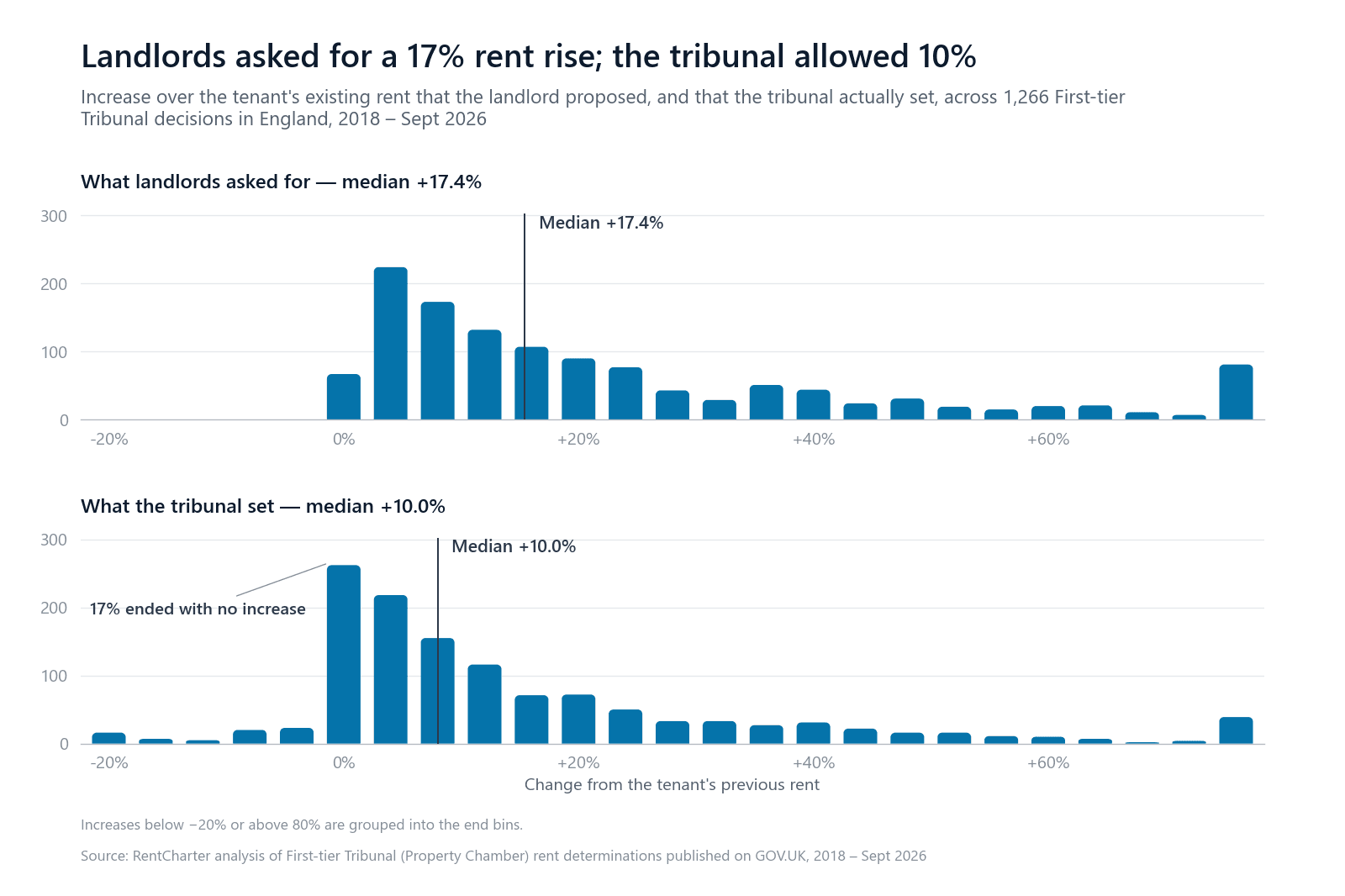
The data says the opening figure rarely survives contact. Across 1,266 published tribunal decisions, landlords proposed a median rise of 17.4% and the panel set 10%; 17% of tenants ended with no increase at all.
If you want the wider process — dates, checking the notice, escalating — read how to respond to a rent increase letter. This post is just the letters.
Before you write
Two checks take ten minutes and change what you should say.
- Is it a valid Section 13 notice? A rent increase on a periodic tenancy in England has to be on the prescribed form, give at least two months' notice, and come no sooner than 12 months after the last increase. An email saying “the rent is going up next month” is a proposal, not a notice. Run it through the Section 13 checker or read the four validity tests.
- Where does the new figure sit against the market? The only question a tribunal asks is whether the proposed rent is above what similar properties let for locally. Run a free rent check with your postcode and bedroom count to get the lower quartile, median and upper quartile for comparable lets. Those three numbers are the spine of every letter below.
Which rent increase letter to send
- Letter 1 — asking the landlord not to increase the rent. Use when your current rent is already at or above the local median. You are asking the landlord to withdraw the notice, and telling them plainly that you would otherwise refer it to the tribunal.
- Letter 2 — the counter-offer. Use when some increase is defensible but the figure is too high. You propose a specific lower number backed by the market range.
- Letter 3 — accepting on conditions. Use when the increase is broadly fair but there are outstanding repairs, or you want the start date moved. You trade agreement for things you actually need.
Whichever you pick, keep it under a page, keep the tone businesslike, and put a specific number or a specific ask in it. Vague letters get vague replies.
Letter 1: asking your landlord not to increase the rent
The tribunal line matters. Under the Renters' Rights Act 2025 the tribunal can only confirm or lower the proposed rent, so a landlord asking for an above-market figure has nothing to gain from a hearing and a few months of delay to lose. Saying you know the route changes the conversation.
Letter 2: the counter-offer letter
Letter 3: accepting the increase on conditions
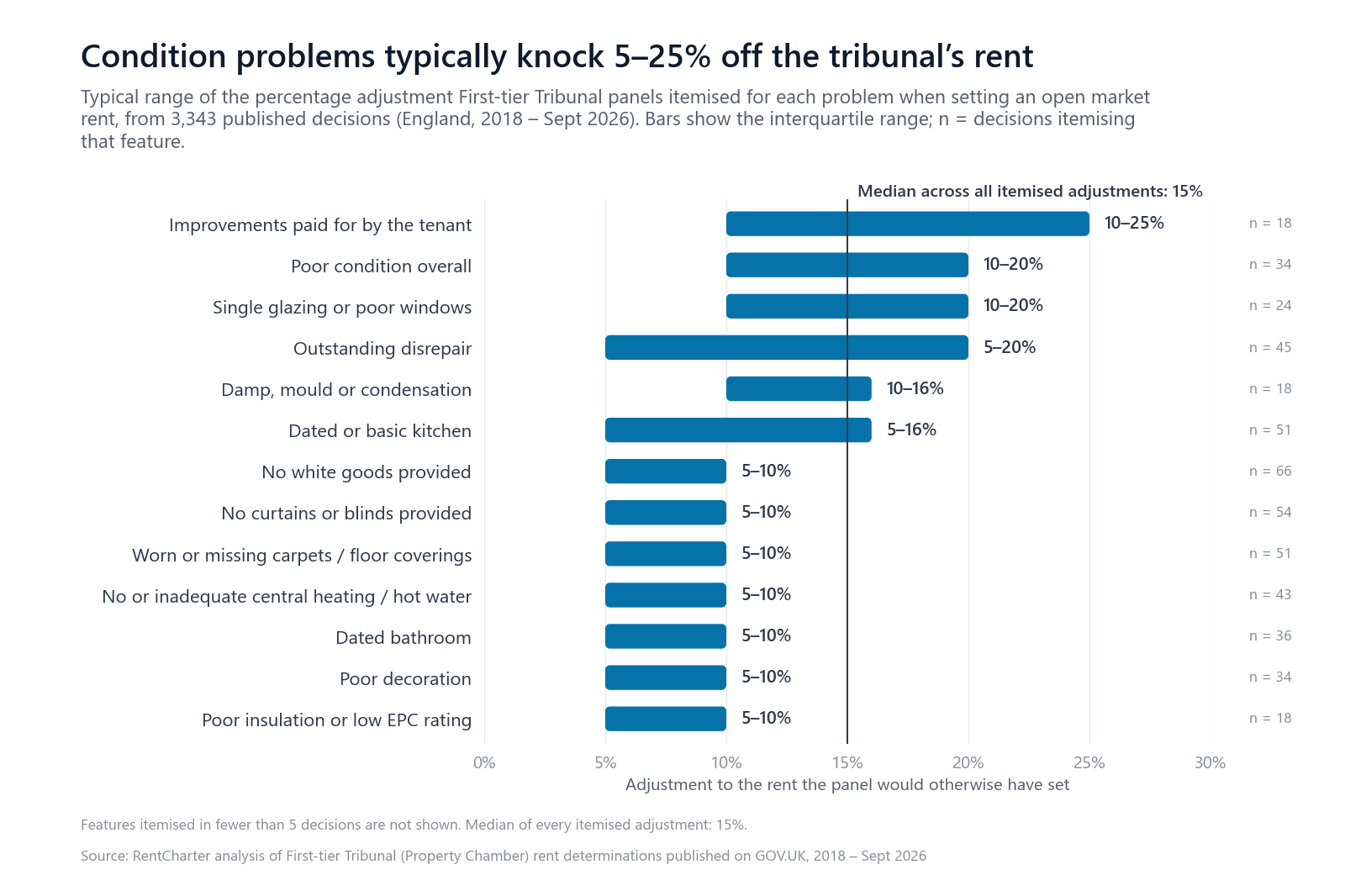
Condition is not a side issue. When tribunal panels itemise a condition problem, they typically knock 5–25% off the rent they would otherwise have set, and tenants who put disrepair evidence in front of the panel won more often than those who did not — see what evidence wins at the rent tribunal. Mentioning it in the letter tells the landlord you know that.
The rent increase email to your landlord
Most of this happens by email now. Keep the subject line factual and the body short — the attachment does the arguing.
What to attach
- A one-page market summary. The rent check result prints cleanly and shows the lower quartile, median and upper quartile for comparable local lets.
- Three to five comparables. Similar bedrooms, similar type, same area, advertised or let in the last few months. Our guide to finding rent comparables covers where to look and how to lay them out.
- Dated photos of any disrepair you rely on in Letter 3, plus the message where you first reported it.
Do not attach your payslips or explain what you can afford. The tribunal does not consider affordability and neither, in practice, does a landlord weighing up a void. Market evidence is the argument.
After you send it
Three outcomes. Agreed — get the figure and start date in writing and you are done. Counter-countered — the most common reply; decide whether the gap is worth a tribunal application. Refused or ignored — the original notice stands, and the clock is still running.
This page covers private tenancies in England. Scotland, Wales and Northern Ireland have separate rent-increase rules and their own tribunals.
FAQ
Can I just refuse a rent increase in England?
Not by letter alone. If the landlord has served a valid Section 13 notice, the new rent takes effect on the date in the notice unless you have applied to the First-tier Tribunal before then. A letter asking them not to increase the rent is a negotiation step; the tribunal application is the legal step that actually stops the figure taking effect. If the proposal came as an informal email rather than a Section 13 notice, you can decline it and nothing changes until a proper notice is served.
Should I send a letter or an email about a rent increase?
Either. An email is fine and gives you a dated record. Use the letter version if your tenancy agreement says notices must be sent by post, or if the landlord uses an agent who prefers formal correspondence. Whatever you send, keep a copy and note the date.
Does writing to my landlord pause the deadline?
No. The deadline to apply to the tribunal, which is the day before the new rent start date at the latest, keeps running while you negotiate. If you have not had a written agreement a week or two before that date, apply. You can withdraw the application later if you settle.
Can my landlord evict me for pushing back on a rent increase?
Section 21 'no-fault' eviction was abolished by the Renters' Rights Act 2025. A landlord in England now needs one of the Section 8 grounds to seek possession, and disagreeing with a rent increase is not one of them.
What if the landlord ignores my letter?
Silence is a common reply. Follow up once after a week. If the start date is approaching and you still have nothing in writing, treat the increase as live and decide whether to accept it or apply to the tribunal for an open market rent determination (Form MR1, £47, often £0 with a fee waiver).