Can you appeal a rent tribunal decision? The short answer
Yes, but only on a point of law, only with permission, and only within 28 days. A rent determination by the First-tier Tribunal (Property Chamber) can be appealed to the Upper Tribunal (Lands Chamber), but the Upper Tribunal does not re-value the property. It asks whether the First-tier Tribunal made a legal mistake. “They set it too high” is not a legal mistake. “They ignored the comparables I sent and gave no reason” might be.
For most tenants the practical answer is different from the legal one: the decision stands, the rent applies from the decision date, and the cheapest reset is the next Section 13 notice a year later, with better evidence this time. This page covers both.
What counts as a point of law
Examples that can ground an appeal:
- Wrong test. The tribunal set something other than the open market rent under section 14 of the Housing Act 1988, for example by adding an “inflation uplift” or treating the landlord's costs as relevant.
- Disregards not applied. It counted improvements you paid for, or ignored disrepair it was told about, when section 14 required the opposite.
- Evidence ignored or reasons missing. You submitted comparables and the decision does not engage with them, or the reasons do not explain how the figure was reached.
- Procedural unfairness. You were not given the landlord's evidence in time to respond, or a hearing went ahead without you for a reason outside your control.
- Jurisdiction. The tribunal decided a notice it had no power to decide (for example an invalid one), or struck your application out as late when it was in time.
Examples that do not:
- The tribunal preferred the landlord's comparables to yours.
- You have found better comparables since the decision.
- The figure feels unaffordable.
- The panel did not inspect the property (inspections are discretionary).
How to apply for permission to appeal
- Get the written reasons. If you only have a short-form decision, ask the tribunal for full reasons straight away; the 28 days run from when the reasons are sent.
- Write to the First-tier Tribunal within 28 days. Head it “Application for permission to appeal”. Identify the decision (date, property, case reference), set out each ground as a point of law, say what result you want, and attach the decision. Send it to the regional office that decided the case.
- Wait for the tribunal's answer. It can grant permission, refuse it, or review its own decision and change it if it accepts there was an error.
- If refused, renew to the Upper Tribunal. You can ask the Upper Tribunal (Lands Chamber) directly for permission. The refusal notice states the time limit for doing so; it is short, so act on it the day it arrives.
Set aside, review and corrections
Three things short of an appeal are often the right tool:
- Set aside (rule 51). If papers were not sent or received, you or your representative were absent, or there was another procedural irregularity, you can ask the First-tier Tribunal to set the decision aside and decide again. The test is whether it is in the interests of justice.
- Review. When you apply for permission to appeal, the tribunal may review its decision itself and correct an error without the case going further.
- Slip rule. Clerical mistakes, such as a figure transposed or a wrong date, can be corrected on request at any time.
What happens to the rent meanwhile
The new rent is not backdated: it generally takes effect from the tribunal's decision (or the date in the notice, if that is later), and the tribunal can put it back further if paying it straight away would cause undue hardship. Check the current rules on gov.uk or with Shelter. An application for permission to appeal does not change that unless the tribunal expressly suspends its decision, which is rare. Pay the rent the tribunal set from the date it set. If the appeal succeeds, the new decision replaces the old one and any overpayment can be dealt with then; if it fails, you have avoided arrears.
If the tribunal set the rent at or near the landlord's figure, you can also ask it, in cases of undue hardship, to defer the start of the new rent by up to two months. That request goes in with your original application or at the hearing, not on appeal.
The better route: next year's notice
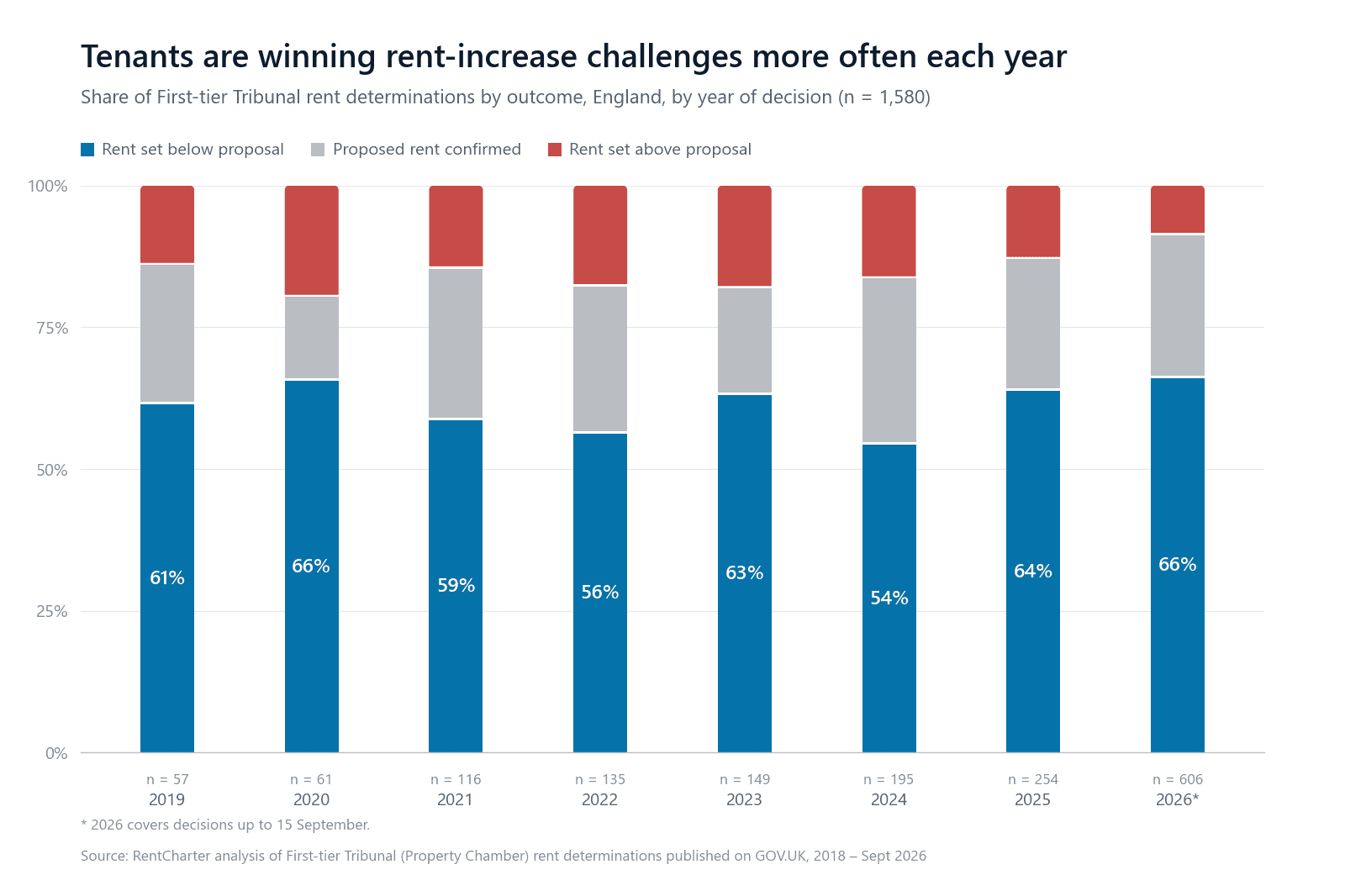
A landlord can serve a new Section 13 notice once 52 weeks have passed since the last increase took effect. If the tribunal's figure was high because the evidence was thin, the next notice is a fresh chance to make the case properly. The published decisions show what that is worth: tenants who put in comparables saw the rent set below the landlord's figure 73% of the time, against 62% for those who did not (512 and 125 decisions).
Start building that case now: the free rent check shows where your rent sits against local comparables, and rent tribunal evidence explains what panels actually weigh.
FAQ
Can I appeal a rent tribunal decision just because I think the rent is too high?
No. Appeals from the First-tier Tribunal (Property Chamber) go to the Upper Tribunal (Lands Chamber) on a point of law only, and only with permission. Disagreeing with the figure, or wishing you had sent better comparables, is not a point of law. An appeal needs an error: the wrong legal test, evidence ignored, reasons that do not add up, or an unfair procedure.
How long do I have to appeal a rent tribunal decision?
You apply to the First-tier Tribunal in writing for permission to appeal within 28 days of the date it sent you its written decision with reasons (rule 52 of the Tribunal Procedure (First-tier Tribunal) (Property Chamber) Rules 2013). A late application must ask for an extension and explain the delay, and the tribunal can refuse it.
Does the new rent apply while I appeal?
Yes, unless the tribunal orders otherwise. Applying for permission does not pause the decision. Keep paying the rent the tribunal set, from the date it set, until a higher tribunal says different. Falling behind during an appeal creates arrears, which are a ground for possession.
Can my landlord appeal if the tribunal lowered the rent?
Yes, on the same terms: a point of law, with permission, within 28 days. Landlord appeals are rare in practice because the next Section 13 notice, a year on, is a cheaper way to try again. If your landlord does apply, you will be sent the application and can respond.
What if I missed the hearing or never received the papers?
That is a procedural problem rather than an appeal. You can ask the First-tier Tribunal to set its decision aside under rule 51 if a document was not sent or received, you were absent for a good reason, or there was some other procedural irregularity, and it is in the interests of justice. Apply as soon as you discover the problem; the same 28-day period is the usual limit.
Does it cost anything to appeal?
Asking the First-tier Tribunal for permission is part of the case you have already paid for. If the matter reaches the Upper Tribunal (Lands Chamber) there are separate fees and, unlike the First-tier Tribunal, costs can sometimes be awarded against the losing party. Check the current fees on gov.uk and get advice before going that far.