Rent increase on Universal Credit: the short answer
Universal Credit covers a rent increase only up to the Local Housing Allowance rate for your area. If your rent is already at or above that rate, your housing costs element does not move and you pay the whole increase yourself. You must still report the new rent, and you can challenge the increase at the tribunal on the same terms as anyone else.
That cap is why a rent increase hits benefit claimants harder than most. For a tenant paying from their own income, a £100 rise is a £100 rise. For a tenant at the LHA ceiling, it is a £100 cut in what is left after rent, with no offset. The first thing to check is therefore not “will Universal Credit pay?” but “is the new figure actually the market rent?”.
How the Local Housing Allowance cap works
Universal Credit's housing costs element for private tenants is the lower of two figures: your actual rent, and the LHA rate for the number of bedrooms you are entitled to in your Broad Rental Market Area. LHA rates were set in April 2024 at the 30th percentile of local rents from the year before, and have been frozen since: they were not increased in April 2025 or April 2026. Local rents, by contrast, rose 4.0% in England in the year to August 2026 according to the ONS. The gap between what landlords ask and what the cap covers widens every year the freeze continues.
- Rent below the LHA rate: an increase is covered until it reaches the rate. Beyond that, nothing.
- Rent at or above the LHA rate: an increase changes nothing on the benefit side. You pay all of it.
- Single under 35: the shared accommodation rate applies even if you rent a self-contained flat, with limited exceptions, so the shortfall is often largest here.
You can look up the rate for your postcode and bedroom entitlement on the Valuation Office Agency's LHA search on gov.uk. Compare it with the proposed rent before you do anything else.
How to report a rent increase to Universal Credit
- Sign in to your Universal Credit account and open Report a change.
- Choose Where you live and what it costs, then the option for a change in rent.
- Enter the new monthly rent and the date it starts: the date on the Section 13 notice, not the date you received it.
- Keep the notice (Form 4A) to hand. Universal Credit may ask for it as proof, and your landlord may be asked to confirm the figure.
- Report it in the assessment period in which the new rent takes effect, and report it even if you expect no change in your payment. Failing to report a change in rent can lead to an overpayment or a penalty later.
If the increase takes you over the cap
Three things can soften a shortfall, and none of them is automatic:
- Discretionary Housing Payment. Apply to your council. DHPs are cash-limited, usually time-limited, and refused more often than they are granted, but they exist for exactly this situation.
- Negotiate. A landlord who knows the increase will push you into arrears may prefer a smaller rise paid reliably. The rent increase letter templates include a counter-offer.
- Challenge it. If the new rent is above what similar homes nearby let for, the tribunal can set it lower. See below.
Whatever you do, keep paying the rent that is legally due. Arrears are a ground for eviction; a disputed increase is not.
Challenging the increase on Universal Credit
Your benefit status plays no part in the tribunal's decision. It sets the open market rent for the property, and since 1 May 2026 it can only confirm or lower the landlord's figure. Across 1,266 published decisions, landlords asked for a median rise of 17.4% and the tribunal set a median of 10%; 17% of tenants ended with no increase at all.
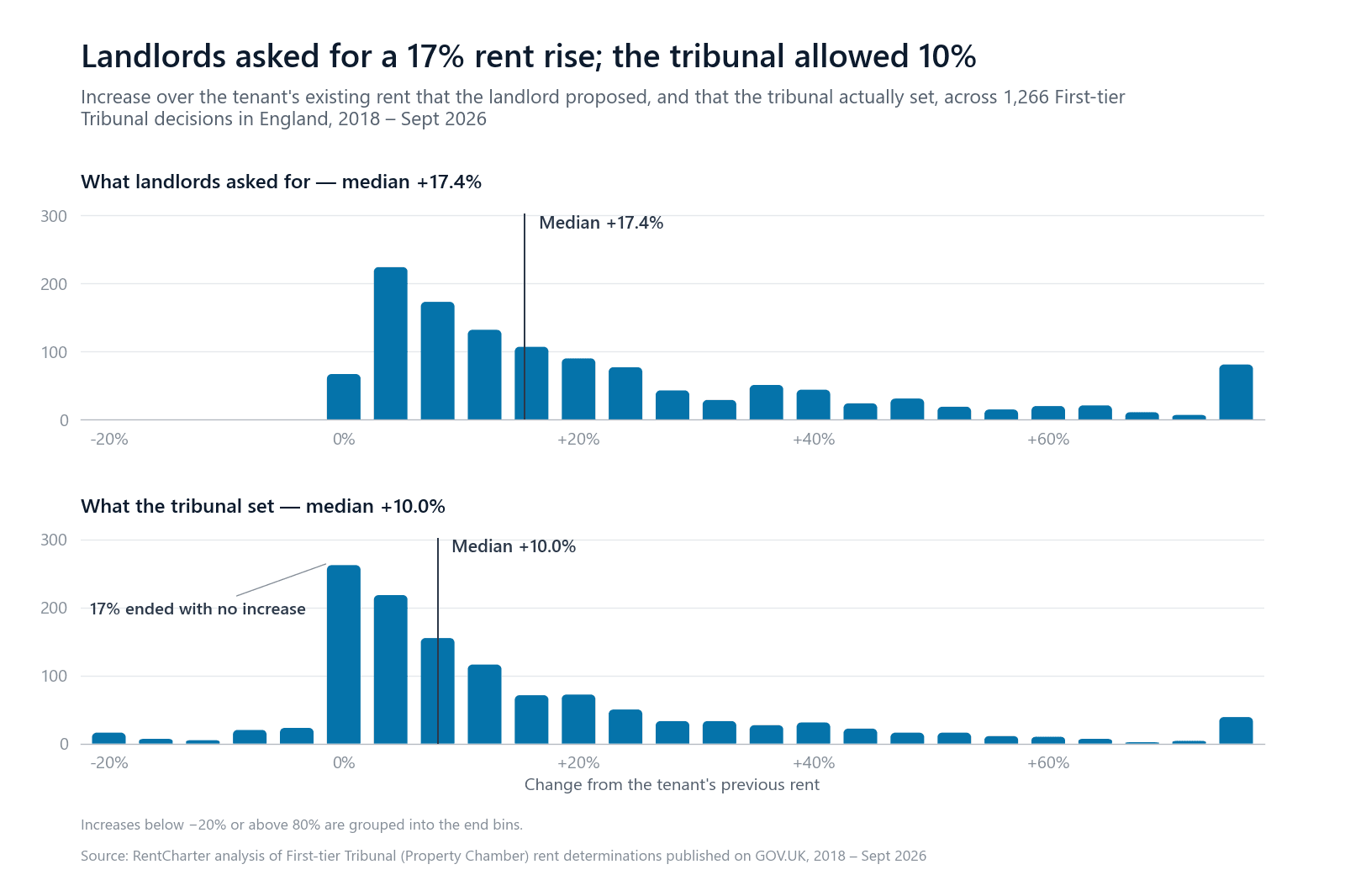
Two practical points for claimants:
- The fee can be £0. £47 application fee — waived if your notice is dated before 1 May 2026 or you rent from a social landlord, and Help with Fees can reduce it to £0 if you have little or no savings. Apply for Help with Fees online before, or at the same time as, the tribunal application and quote the reference on the form.
- Timing protects you. The new rent is not backdated: it generally takes effect from the tribunal's decision (or the date in the notice, if that is later), and the tribunal can put it back further if paying it straight away would cause undue hardship. Check the current rules on gov.uk or with Shelter. Report to Universal Credit the rent you are actually liable for; while the tribunal is deciding, that is your existing rent.
Your application must reach the tribunal before the date the new rent in the Section 13 notice would take effect. Start with the free rent check to see where the proposed figure sits against local comparables, then read whether a rent tribunal is worth it for the costs and odds.
FAQ
Will I get more Universal Credit if my rent goes up?
Only if your current rent is below the Local Housing Allowance (LHA) rate for your area and household size. Universal Credit pays the lower of your actual rent and the LHA rate. If you already receive the LHA maximum, a rent increase changes nothing on the Universal Credit side: the whole increase comes out of your own pocket.
Does housing benefit go up if rent goes up?
The same rule applies. Housing Benefit for private tenants is capped at the LHA rate. If your rent was below the cap, Housing Benefit rises up to the cap; if you were already at the cap, it stays the same. Housing Benefit now mainly covers people of pension age and some supported or temporary accommodation; most working-age private tenants are on Universal Credit.
How do I report a rent increase on Universal Credit?
Sign in to your Universal Credit account, go to 'Report a change', choose 'Where you live and what it costs' and enter the new rent and the date it starts. Upload or keep the Section 13 notice (Form 4A) as proof. Report it in the assessment period in which the new rent takes effect, and report it even if you expect no change in your payment: you have a duty to report changes in rent.
Do I have to pay the gap between my rent and the LHA rate?
Yes, unless you can get a Discretionary Housing Payment from your council to cover some or all of the shortfall. DHPs are limited, time-limited and not guaranteed. That is why an increase that takes your rent further above the LHA rate is worth checking and, where it is above market, challenging.
Can I challenge a rent increase if I am on Universal Credit?
Yes, on exactly the same terms as any other private tenant in England. The tribunal looks at the open market rent for the property; your benefit status is irrelevant to the figure. The £47 tribunal fee can be reduced to nothing through Help with Fees if you have little or no savings and a low income, which includes most people on Universal Credit.
Can my landlord refuse to rent to me, or treat me differently, because I claim benefits?
No. The Renters' Rights Act 2025 bans blanket 'no DSS' practices: landlords and agents cannot refuse or discriminate against applicants and tenants because they receive benefits. A rent increase served because you claim Universal Credit is still just a Section 13 notice and is tested against the market like any other.