Can a landlord increase rent after a renovation? The short answer
Yes, but only in the normal way and only to market rent. A renovation does not give a landlord in England a special right to raise the rent. The increase still has to come on a Section 13 notice (Form 4A), with at least two months' notice, no more than once in 52 weeks, and it can only take the rent up to what the improved property would let for on the open market. If you paid for the improvements yourself, the tribunal ignores the value they added.
That last point matters more than most people realise. The question is never “how much did the works cost?” It is “what do similar, similarly finished homes nearby rent for now?” A £15,000 kitchen does not entitle the landlord to recover £15,000; it entitles them to the market rent of a flat with a new kitchen.
The rules that still apply after a renovation
- One increase per year. If your rent last went up less than 52 weeks ago, a new notice cannot take effect until the year is up, however much work has been done. See how often a landlord can increase rent.
- Two months' notice, on the form. A text saying “the rent is £1,400 now the bathroom is done” is a request, not a notice. You can decline it and keep paying your current rent. Our seven validity checks cover the rest.
- Market rent is the ceiling. If you refer the notice to the First-tier Tribunal, it sets the open market rent for the property in its current condition. Under the Renters' Rights Act 2025 the tribunal can only confirm or lower the proposed rent — never raise it.
- No fixed term to wait out. Since 1 May 2026 all private tenancies in England are periodic, so there is no “end of contract” at which a higher rent can be imposed. The Section 13 route is the only route.
Improvements the landlord paid for
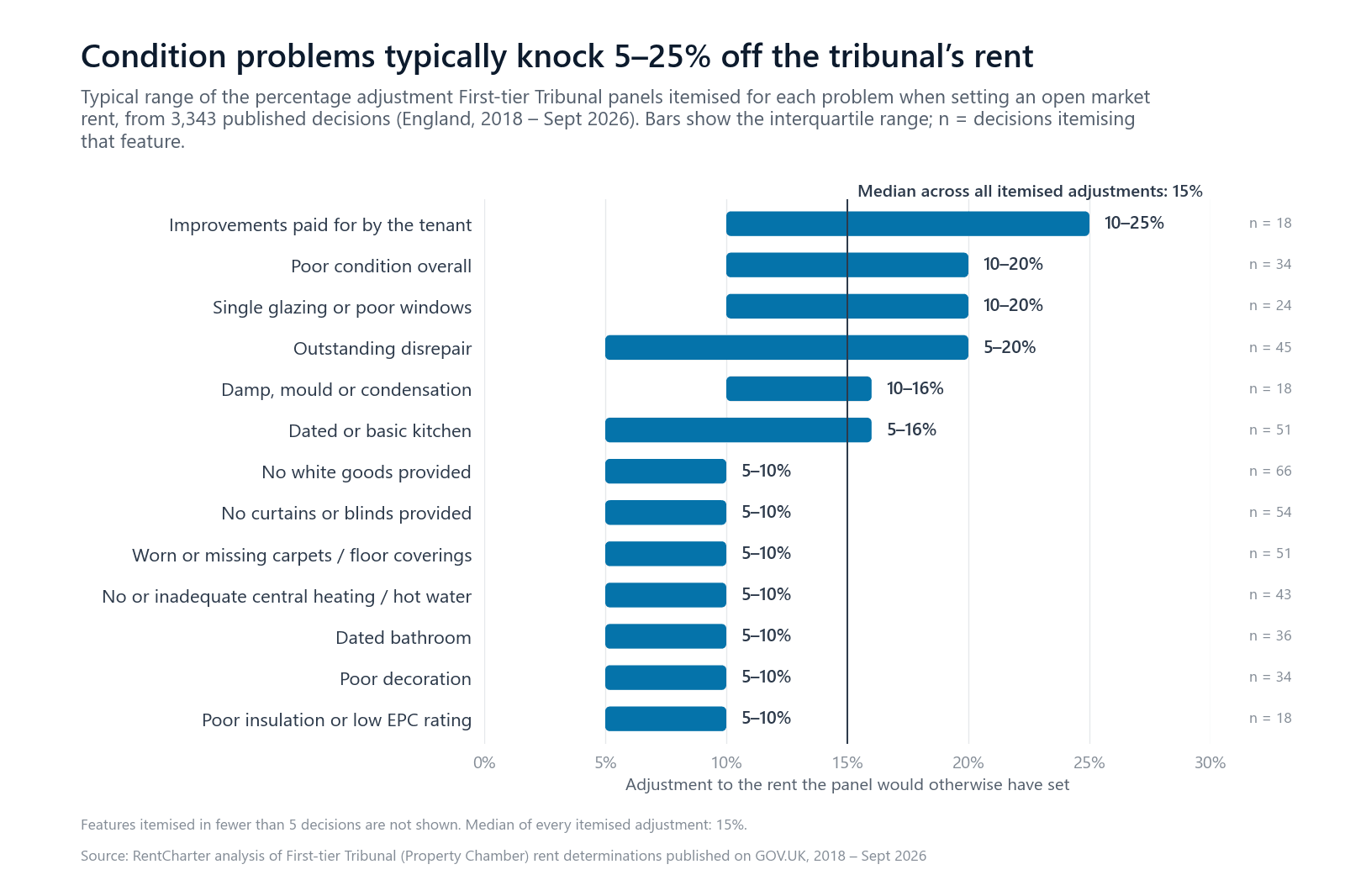
Genuine improvements raise market rent, and the tribunal will say so. A property that has gone from a 1990s kitchen and storage heaters to a fitted kitchen and gas central heating is a different product, and comparable lets of that better product will be dearer. Published decisions regularly itemise the opposite effect: panels knock 5–25% off their starting figure for a dated kitchen (5–16% in 51 decisions), no central heating, single glazing or poor decoration, so removing those problems removes the deduction.
Three limits still apply even to a landlord-funded renovation:
- Cosmetic is not structural. Fresh paint and a new carpet move the needle a little; they do not turn a two-bed flat into a different band of comparables.
- Unfinished counts against, not for. The tribunal values the property as it is on the date the new rent would start. Half-done works, snagging and outstanding disrepair (typically 5–20% off) reduce the figure.
- The comparables must match the finish. A landlord who quotes newly refurbished lets to justify the rent on a property that was only partly refurbished is comparing the wrong thing. Check what was actually done against what the asking comparables offer.
Improvements you paid for
This is the part landlords most often get wrong. Section 14(2) of the Housing Act 1988 requires the tribunal to disregard any increase in the rent attributable to a “relevant improvement” carried out by the tenant, unless the tenancy obliged you to do it. If you fitted the shower, redecorated throughout at your own cost, laid the flooring or paid for the garden to be landscaped, the landlord cannot charge you a higher rent for the benefit of your own money.
The published decisions bear this out. Where panels itemised tenant-funded improvements they typically deducted 10–25% (18 decisions) from the rent they would otherwise have set, one of the largest adjustments in the data. To rely on it you need evidence: receipts, before-and-after photographs, and ideally the email in which the landlord agreed to the work. Put them in your tribunal evidence bundle.
Repairs are not improvements
A new boiler because the old one failed, damp treatment, a replaced window or a mended roof is a repair. Repairs put the property back to the standard the landlord is already obliged to provide under section 11 of the Landlord and Tenant Act 1985 and the Homes (Fitness for Human Habitation) Act 2018. Your current rent already assumes that standard, so a repair does not justify a rent above the market for a property in sound condition.
If the increase arrived shortly after you reported a problem, read rent increase after asking for repairs. The timing does not make the notice invalid, but it changes the negotiation and the tribunal will still value the property on condition, not on how recently the landlord spent money.
What to do with the new figure
- Check the comparables for the new finish. Run the free rent check with the property as it now is. If the proposed rent sits above similar renovated lets nearby, you have grounds to push back.
- List what you paid for. Anything you funded comes off the landlord's case. Gather the receipts now.
- Counter-offer in writing. The rent increase letter templates include a counter-offer that cites comparables.
- Keep the deadline. Your application must reach the tribunal before the date the new rent in the Section 13 notice would take effect. £47 application fee — waived if your notice is dated before 1 May 2026 or you rent from a social landlord, and Help with Fees can reduce it to £0 if you have little or no savings.
FAQ
Can my landlord put the rent up straight after renovating?
Only through the normal route. In England a private landlord can propose a new rent once in any 52 weeks, on a Section 13 notice (Form 4A) giving at least two months' notice. A renovation does not create an extra opportunity to raise the rent, and it does not shorten the notice period. If your rent went up less than a year ago, a further increase cannot take effect until the year is up.
How much can a landlord raise rent after a renovation?
There is no fixed percentage. The legal ceiling is the open market rent for the property as it now is. A new kitchen, bathroom or heating system can genuinely raise what the property would let for, so the fair figure may be higher than before. The test is still what similar, similarly finished homes nearby let for, not what the works cost.
I paid for the improvements myself. Can the landlord charge me more for them?
Not at the tribunal. Section 14 of the Housing Act 1988 tells the tribunal to disregard any increase in value caused by a 'relevant improvement' that the tenant carried out, other than under an obligation in the tenancy. In published decisions, panels that itemised tenant-funded improvements typically knocked 10–25% off the rent they would otherwise have set.
Can a landlord increase rent after doing repairs?
Repairs are different from improvements. Fixing a boiler, treating damp or replacing a broken window restores the property to the standard the landlord was already obliged to provide, and the rent you pay already assumes that standard. Repairs do not justify an above-market rent, and an increase that follows a repair request can be challenged like any other.
What if the renovation is still unfinished or caused disruption?
The tribunal values the property on the date the new rent would start, in the condition it is actually in. Unfinished works, outstanding disrepair and loss of a room or facility all count against the proposed rent. Disruption you have already lived through is not a legal rent factor, but it is a fair point in negotiation.