Is a rent tribunal worth it? The short answer
If the proposed rent is above what similar homes let for locally, usually yes. Applying costs £47, or nothing with a fee waiver. Where the tribunal cut the rent, the median cut was £100 a month, which is £1,200 a year. And since 1 May 2026 there is no longer any risk of coming out with a higher rent than your landlord asked for.

What a rent tribunal costs
- Fee: £47 application fee — waived if your notice is dated before 1 May 2026 or you rent from a social landlord, and Help with Fees can reduce it to £0 if you have little or no savings.
- Lawyers: not needed. The application is form MR1 (online or on paper), and most tenants represent themselves.
- Costs orders: The tribunal does not generally award costs against either side.
- Time: Median 11 weeks from application to decision in published cases; typical range 8–16 weeks, plus 2–6 weeks for the written decision.
- Effort: an evening or two to gather comparable rents and photos of the property's condition. Most rent cases are decided on the papers, occasionally by a short remote video call. You do not attend a local court.
The waiting time works in your favour. The new rent is not backdated: it starts from the date in the notice only if the tribunal decides before then — otherwise from the next payment date after the decision.
Your odds at the rent tribunal
Across 1,580 published decisions where both figures could be measured, the tribunal set the rent below the landlord's figure in 62.5% of cases. The size of the proposed rise matters a lot: rises under 10% were cut 50% of the time, rises of 50% or more 89% of the time. See is my rent increase too high for every band, and the rent tribunal success rate for the full breakdown by region and year.
The risk that went away
Until 2026 the honest answer to “is it worth it?” came with a warning: the tribunal set the market rent, and if the market rent was higher than your landlord proposed, that is what you paid. It happened in 206 of the published decisions we analysed.
Under the Renters' Rights Act 2025 the tribunal can only confirm or lower the proposed rent — never raise it. For any Section 13 notice under the new rules, the worst outcome is that your landlord's figure is confirmed, and even then it applies from the decision, not backdated.
When a rent tribunal isn't worth it
- The new rent is still at or below the local median. The tribunal sets the market rent. If you are already paying less than the market, it will most likely confirm the increase.
- The notice is invalid. You may not need the tribunal at all. Check the seven Section 13 checks first.
- You have already missed the start date. The application has to reach the tribunal before the new rent begins. After that, you are back to negotiating.
- Your landlord offers a fair compromise. If they come down to a figure in line with the comparables, taking it is usually quicker. The counter-offer guide shows how to get there.
How to improve your odds
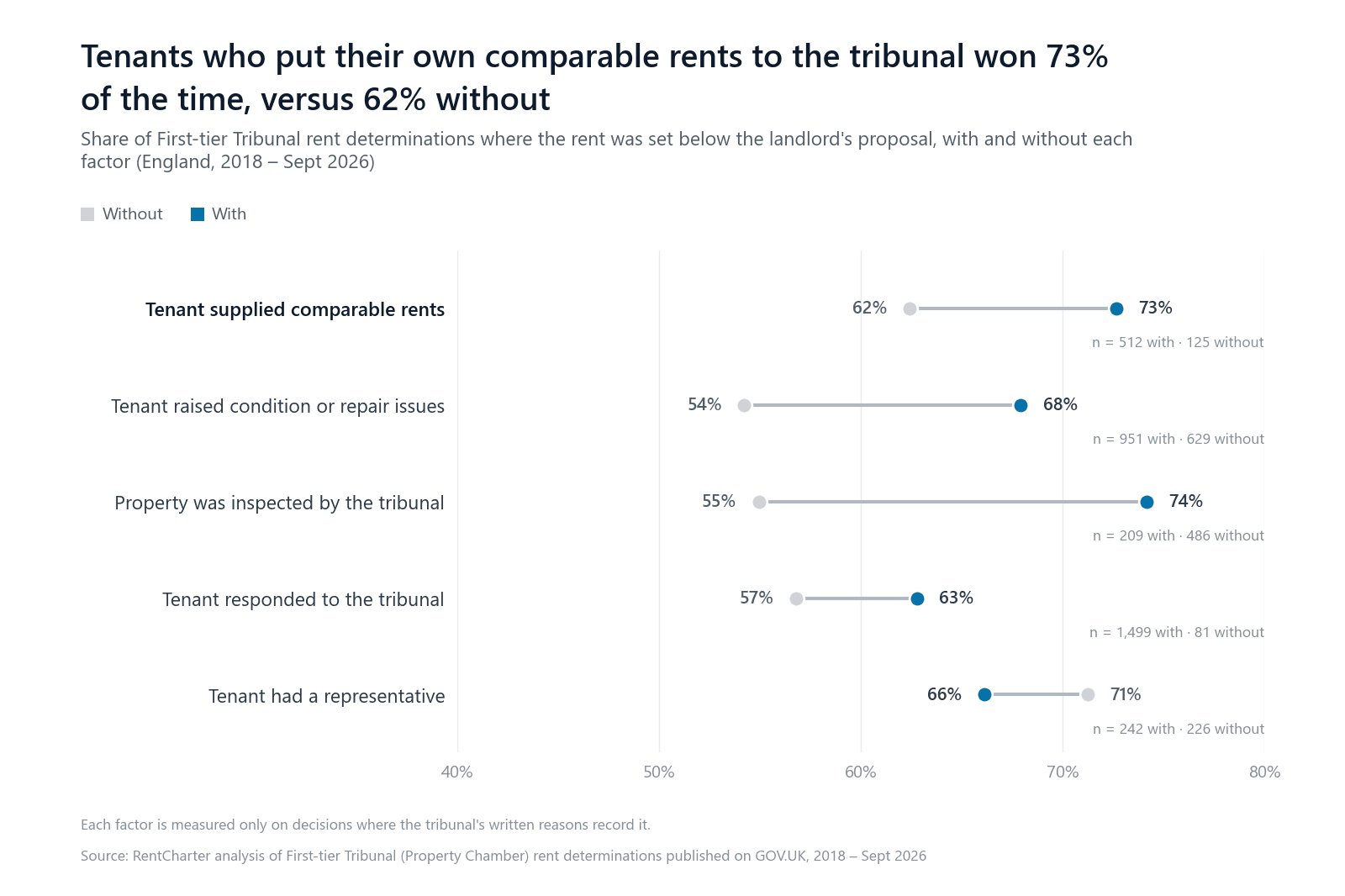
Evidence is what moves a tribunal. Tenants who submitted comparable rents won a reduction in 73% of cases, against 62% for those who did not.
- Three to six comparable lets close by, the same size and type. The guide to rent comparables shows where to find them and how to set them out.
- Condition evidence. Dated photos of disrepair, damp or a basic kitchen, plus your repair requests. Condition often knocks a percentage off the market rent. See what evidence wins at the rent tribunal.
- Local tribunal decisions. Rents the tribunal has already set for similar homes nearby are persuasive. Search them in the decisions database.
Start with the rent check: it finds the comparable lets for your postcode and can turn them, with nearby tribunal decisions, into an evidence pack for your application.
FAQ
Can a rent tribunal increase my rent?
Not any more. For Section 13 notices under the Renters' Rights Act 2025, in force since 1 May 2026, the First-tier Tribunal can only confirm the rent your landlord proposed or set a lower one. Before that it could, and did, set a higher rent in 206 published decisions.
How much does it cost to go to a rent tribunal?
A £47 application fee on form MR1. It is waived if your notice is dated before 1 May 2026, and Help with Fees can reduce it to nothing if you have little or no savings. You don't need a solicitor, and the tribunal does not generally order either side to pay the other's costs.
How long does a rent tribunal take?
Median 11 weeks from application to decision in published cases; typical range 8–16 weeks, plus 2–6 weeks for the written decision.
Do I have to go to a hearing?
Most rent cases are decided on the papers, occasionally by a short remote video call. You do not attend a local court.
Will challenging the rent damage my relationship with my landlord?
It can feel awkward, but it is a routine legal process the Section 13 notice itself tells you about. Your landlord cannot evict you for applying: no-fault Section 21 evictions ended on 1 May 2026. Many landlords settle once a tenant applies, because the new rent is not backdated while the tribunal decides.