Rent increase after asking for repairs: the short answer
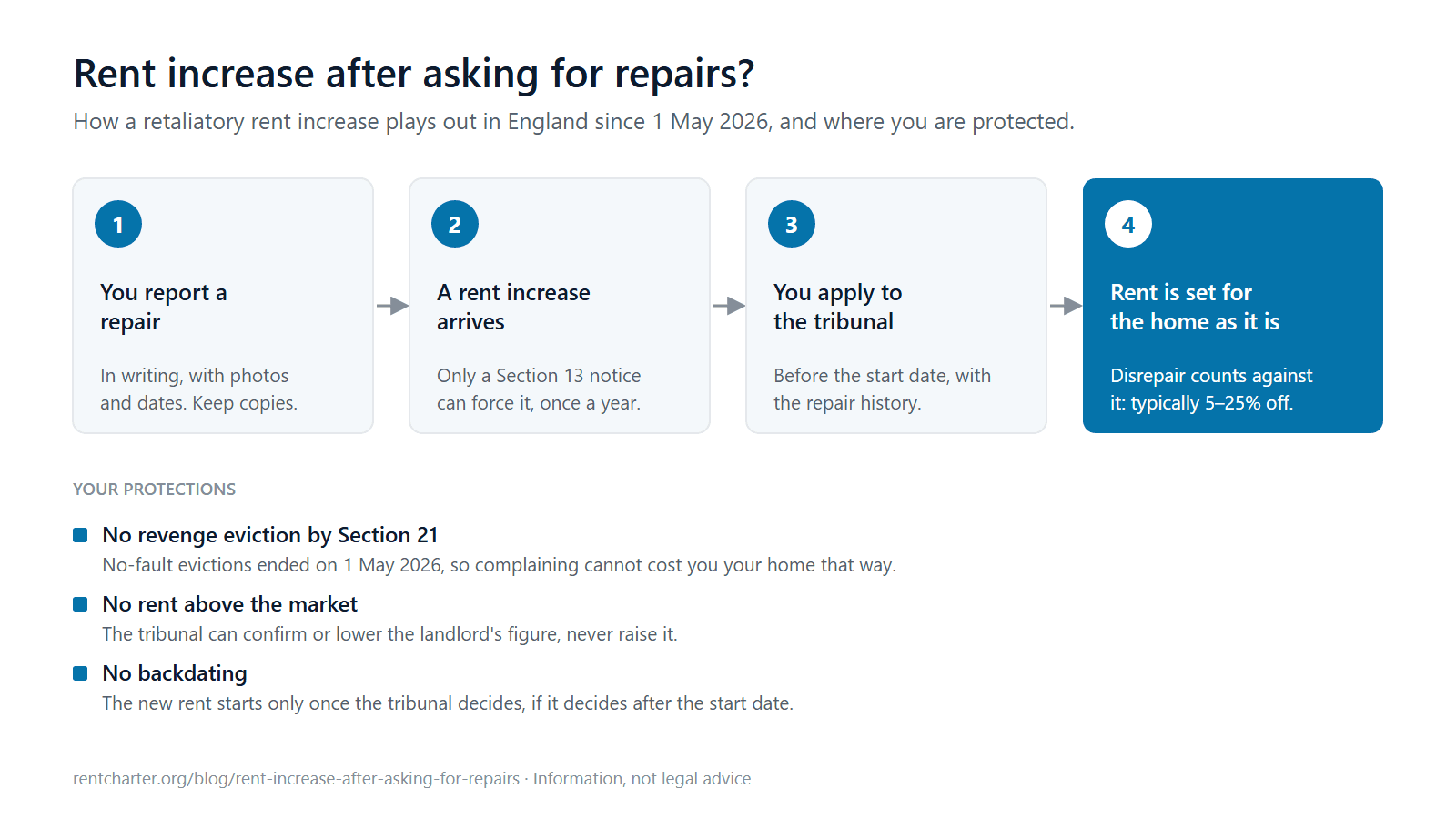
It happens a lot. A tenant reports damp, a broken boiler or a leak, and weeks later a rent increase arrives. England has no specific ban on a “retaliatory” rent increase. But the rules that do apply work strongly in your favour when the home needs repairs:
- the increase must come by a valid Section 13 notice, no more than once a year;
- you can refer it to the First-tier Tribunal, which values your home as it actually is, disrepair included;
- the tribunal can only confirm or lower the landlord's figure;
- and since 1 May 2026 there is no Section 21, so complaining cannot lead to a no-fault eviction.
What your landlord still has to do
A landlord who is annoyed about a repair request has exactly the same route to a higher rent as any other landlord: a Section 13 notice on the prescribed form, at least two months ahead, and at least a year after the last increase. An email saying “since you're asking for work, the rent is going up” does not change your rent. You can say no; see can I refuse a rent increase. If a formal notice has arrived, run the seven validity checks first.
A rent increase also does not cancel the repair. Your landlord is still responsible for the structure, the exterior, and the heating, hot water, gas, electrics and sanitation, whatever the rent is.
Why disrepair lowers the rent at tribunal
When you refer a Section 13 notice, the tribunal works out the open market rent for your home. It starts from what comparable homes in good condition let for, then adjusts for how yours differs: disrepair, damp, a dated kitchen, no central heating. Improvements you paid for yourself are ignored. In 3,343 published decisions, panels that itemised condition problems typically knocked 5–25% off (median 15%).
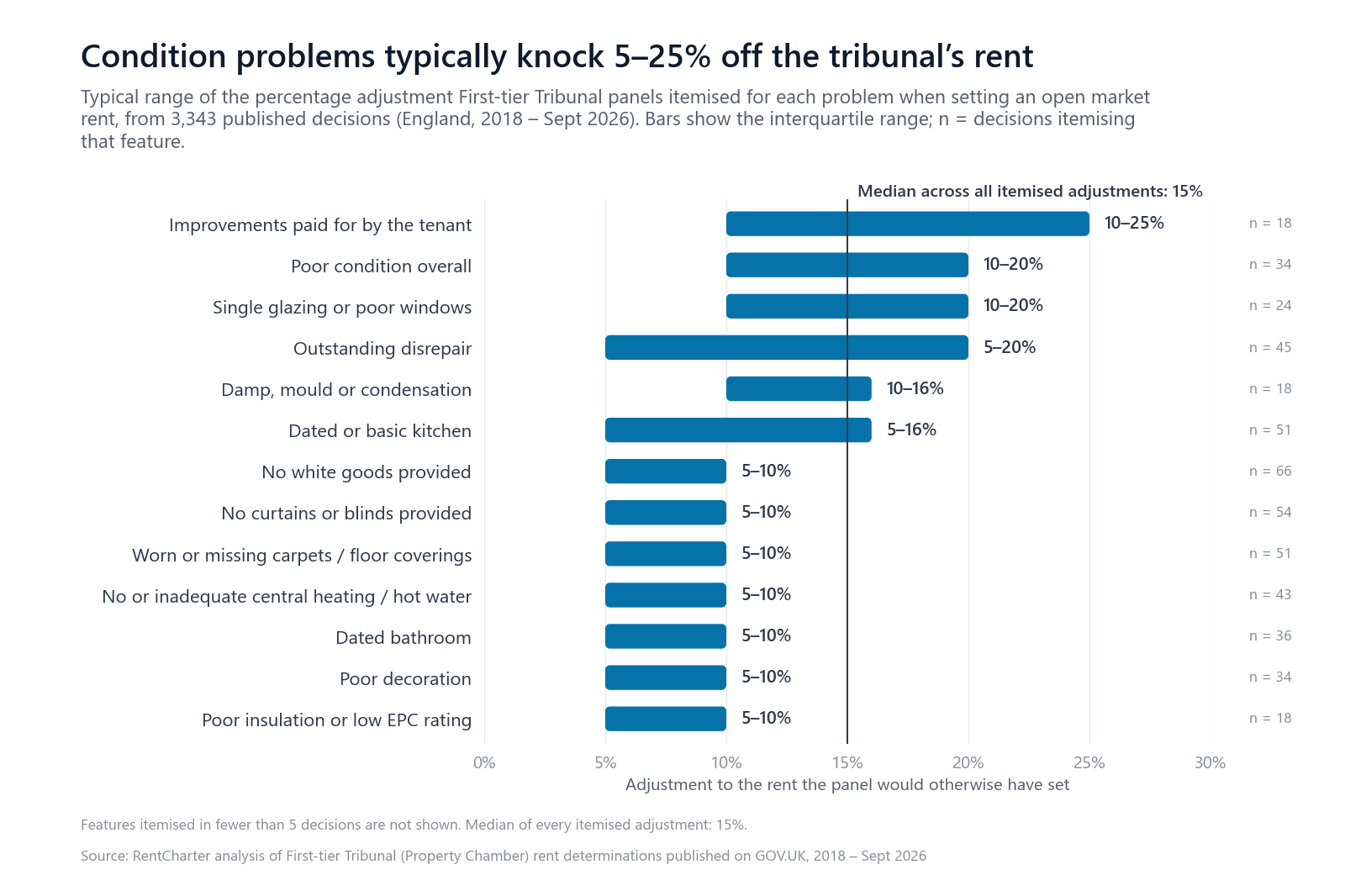
That means the repair history you built up by complaining is your strongest evidence. A landlord who raises the rent on a home that needs work is asking the tribunal to value it as if the work were done, and the tribunal won't. More on what panels look for in what evidence wins at the rent tribunal.
Can they evict you for complaining?
Before 2026 this was the real threat behind a retaliatory rent increase: accept it, or face a Section 21 notice. That route closed on 1 May 2026. A landlord now needs one of the grounds in Section 8, and asking for repairs is not one of them. Selling or moving in are grounds, but they need four months' notice, cannot be used in the first year of a tenancy, and restrict the landlord from re-letting afterwards.
The one thing that can put you at risk is rent arrears. However frustrated you are, don't withhold rent to force the repair.
An increase designed to push you out
Sometimes the increase is so large it is obviously meant to make you leave, sometimes called an “economic eviction”. The tribunal is the answer to this too. It sets the market rent for your home in its current condition, not the figure the landlord wants, so an above-market increase cannot stick if you challenge it. Under the Renters' Rights Act 2025 the tribunal can only confirm or lower the proposed rent — never raise it. The tribunal can also delay the start of the new rent by up to two months if paying it immediately would cause you undue hardship.
What to do now
- Keep paying your current rent in full and on time.
- Put the repair history in one place: dated photos, every request and reply, and when each problem started.
- Chase the repair in writing, and contact your council's private housing or environmental health team if your landlord doesn't act.
- Check the notice with the Section 13 checker.
- Compare the new rent with the market using the rent check, and look up rents the tribunal has set nearby in the decisions database.
- Apply to the tribunal before the start date. £47 application fee — waived if your notice is dated before 1 May 2026 or you rent from a social landlord, and Help with Fees can reduce it to £0 if you have little or no savings. The walkthrough is in how to apply to the First-tier Tribunal.
FAQ
Is a retaliatory rent increase illegal?
There is no specific offence of raising the rent because a tenant complained. But the increase still has to come by a valid Section 13 notice, no more than once a year, and you can refer it to the First-tier Tribunal, which sets the rent for the home in its actual condition and can only confirm or lower the landlord's figure.
Can my landlord evict me for asking for repairs?
Not with a no-fault notice: Section 21 was abolished on 1 May 2026. A landlord now needs a legal ground under Section 8, and asking for repairs is not one. Keep paying your rent in full, because arrears are a ground.
Can I withhold rent until repairs are done?
Don't. Withholding rent puts you into arrears, which gives the landlord a ground for possession. Report the problem in writing, involve your council's private housing or environmental health team if the landlord doesn't act, and take advice before deducting anything from the rent.
Does disrepair reduce the rent the tribunal sets?
Yes. The tribunal values your home as it actually is, then compares it with comparable lets in good condition. Where panels itemised condition problems, they typically took 5–25% off the rent they would otherwise have set. Improvements you made yourself are ignored, so they cannot be used to push your rent up.
What evidence of disrepair should I keep?
Dated photos, copies of every repair request and reply, any council inspection report, and notes of when problems started and what they affect. The same record supports a repair complaint and a tribunal application.