Why the validity of the notice matters
A landlord in England can only force a rent increase on a private tenant through a Section 13 notice. The rules for that notice are strict, and since the Renters' Rights Act 2025 took effect on 1 May 2026 they are stricter. A notice that gets them wrong does not raise your rent. You keep paying what you pay now, and the landlord has to start again with at least two more months' notice.
So before you think about whether the new figure is fair, check whether the notice works at all. It takes five minutes, and it is the step most tenants skip.
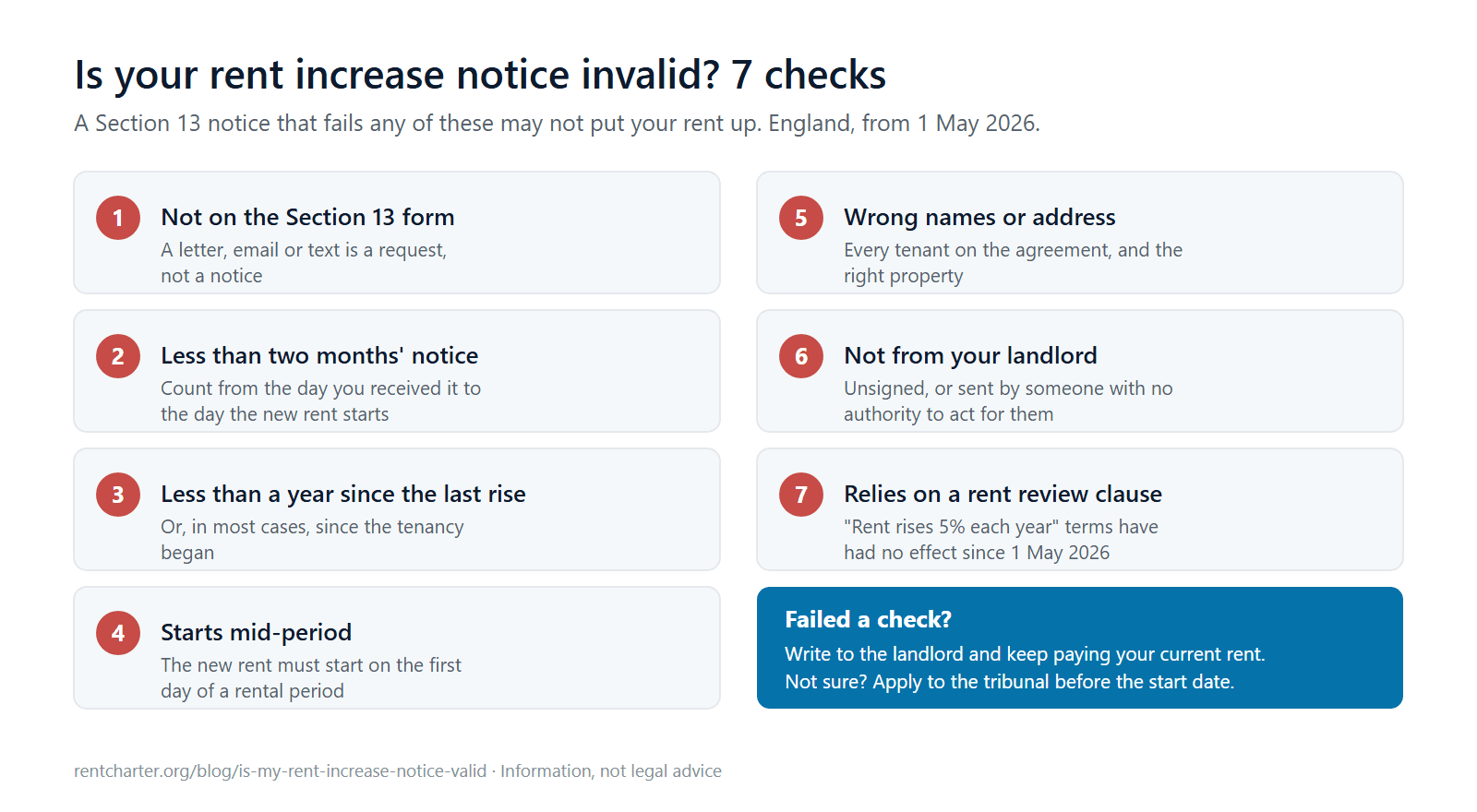
The seven checks
1. Is it on the Section 13 form?
The increase has to be proposed on the prescribed form published on GOV.UK. A letter, an email, a text or a “new tenancy agreement” at a higher rent is a request, not a notice, and you can say no. See can I refuse a rent increase.
2. Does it give at least two months' notice?
Count from the day you received the notice to the day the new rent is due to start. It must be at least two months. Before May 2026 the minimum for a monthly tenancy was one month, so landlords still using old habits (or old templates) often get this wrong. The rent increase notice period post has worked examples.
3. Has it been at least a year?
A Section 13 increase can happen once in any 12 months. If your rent went up under a Section 13 notice less than a year before the new start date, the notice is premature. In most cases the first increase also cannot start within a year of the tenancy beginning. More on this in how often a landlord can increase rent.
4. Does the new rent start at the beginning of a rental period?
If your rent is due on the 15th of each month, the new rent has to start on a 15th. A start date part-way through a period is a common defect.
5. Are the names and address right?
The notice should name every tenant on the agreement and the right property. A notice addressed to only one of two joint tenants, or to the wrong flat, is open to challenge.
6. Is it from your landlord?
It must come from the landlord or an agent acting for them, and be signed. If your property has been sold, it must come from the new owner; see can a new landlord raise the rent.
7. Does it rely on a rent review clause?
Clauses such as “the rent will rise by 5% or CPI each April” have had no effect since 1 May 2026. Section 13 is now the only way to raise the rent on an assured tenancy. A letter that says “under clause 4 your rent is now £X” is not enough.
If your notice fails a check
- Keep paying your current rent, in full and on time. An invalid notice means no increase, not a rent holiday.
- Write to your landlord. Say which requirement the notice fails and that you will keep paying the existing rent. Most landlords will withdraw it and serve a new one. That buys you at least two months, and time to gather evidence.
- If you are not certain, apply to the tribunal anyway. Your application must reach the tribunal before the date the new rent in the Section 13 notice would take effect. Applying keeps your right to challenge the figure if the notice turns out to be valid after all.
- Don't pay the new amount without saying so. Paying it can be treated as agreeing to it.
If it passes every check
A valid notice can still propose too much. The question then is whether the new rent is above what similar homes let for locally, because that is the ceiling the tribunal applies. Run the free rent check on your postcode, and read is my rent increase too high for what tribunals did with rises of different sizes. Then either negotiate or apply before the start date. The step-by-step is in how to challenge a Section 13 rent increase.
FAQ
What happens if a Section 13 notice is invalid?
An invalid notice does not put your rent up. Your existing rent carries on. The landlord can serve a fresh, correct notice, but that restarts the clock: at least two more months before any increase can take effect.
Is a rent increase by email valid?
An email that simply announces a new rent is not a Section 13 notice and cannot force an increase. A properly completed Section 13 form can sometimes be sent by email if your tenancy agreement allows notices to be served that way, but a message in the body of an email is only a request.
Should I stop paying rent if the notice is invalid?
No. Keep paying your current rent in full and on time. An invalid notice means the increase does not apply; it does not mean you can pay less than before. Rent arrears are a ground for possession.
Can my landlord increase the rent in the first year of the tenancy?
In most cases the new rent under a Section 13 notice cannot start within the first year of the tenancy, and it can never start within a year of the last Section 13 increase. If a notice arrives early, check the dates carefully.
Do I need to tell my landlord the notice is invalid?
It is sensible to. Write briefly, say which requirement the notice fails, and confirm you will keep paying your current rent. If you are not sure you are right, apply to the tribunal before the start date as well, so you are covered either way.